
Spray foam insulation in Reno NV - rooms that hold their heat and stop the drafts
Cold rooms, a drafty room over the garage or a power bill that keeps climbing? We pick the foam that fits and seal the gaps.
- Service
- Spray foam insulation
- Call
- (775) 447-1048
How can you tell spray foam might help your house?
A room that never warms up
The room over the garage or an upstairs bedroom runs cold all winter and hot all summer while the rest of the house feels fine. That usually means air is slipping past thin or gapped insulation, and every month it waits, the furnace works harder to make up for it.
Drafts at outlets and baseboards
On a windy day you can feel cold air near outlets, along baseboards or around the attic hatch. Those are usually gaps around pipes, wires and lights that nobody sealed, and any insulation laid over them keeps fighting that draft until the gaps are closed.
Cold floors over the crawl space
The floors stay cold underfoot even with the heat turned up. Often the insulation down there has sagged, gotten damp or was never put in, and the longer damp sits under the house, the more it can work into the wood above it.
What does spray foam insulation do for a Reno house?
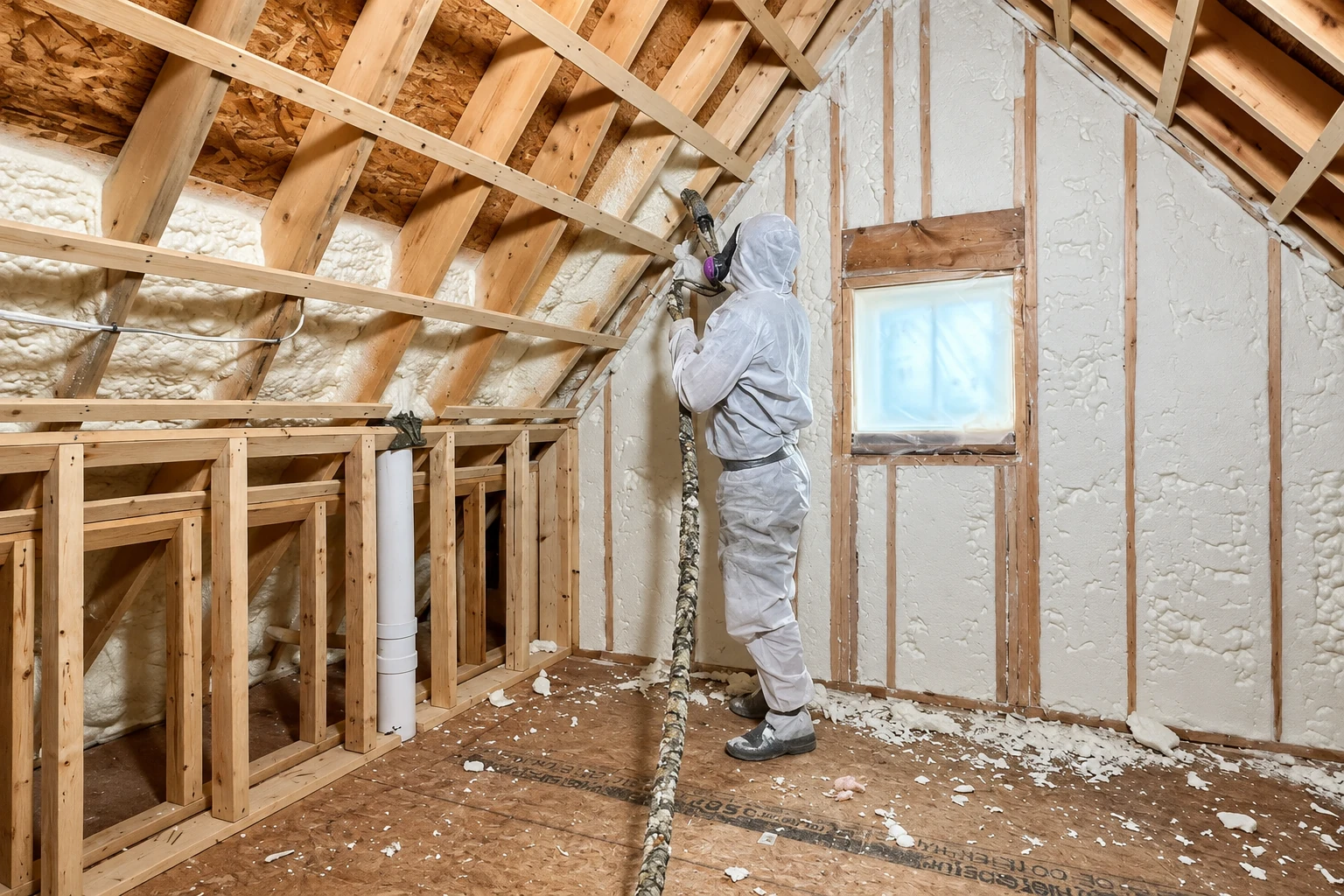
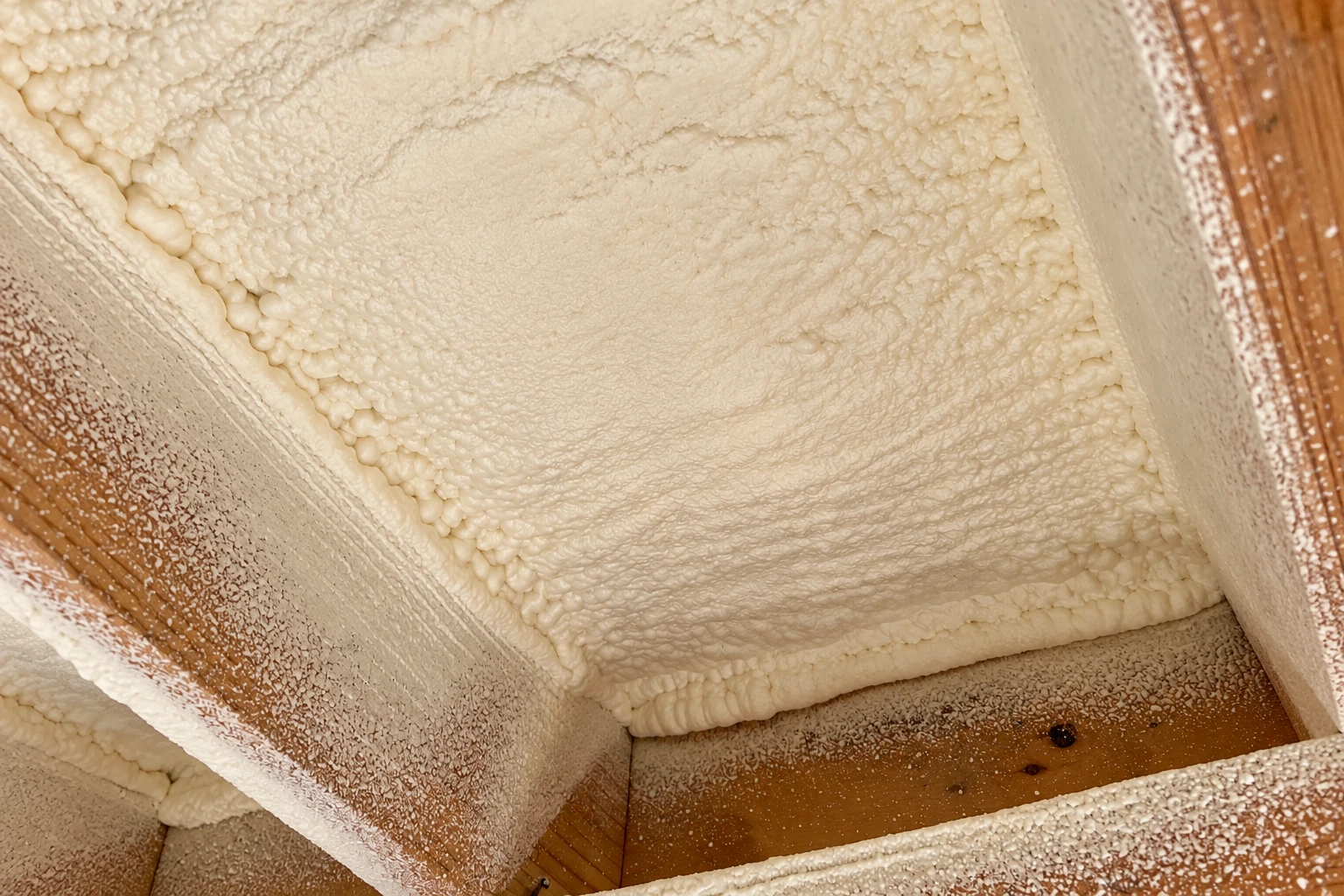
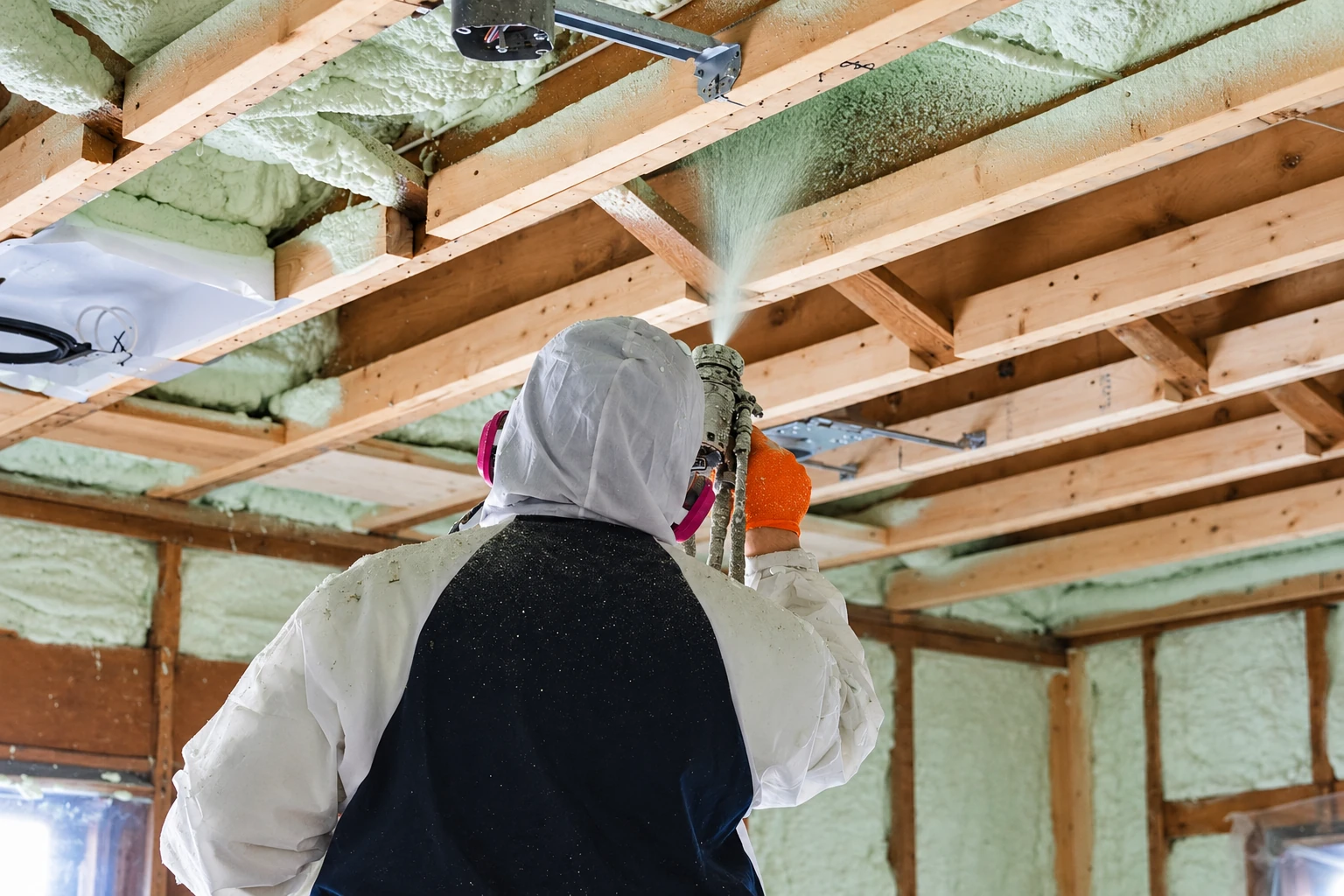
Spray foam insulation goes onto the underside of a roof, into open walls or across a crawl space, where it expands into the gaps, slows heat moving in and out of your Reno home and stops drafts in the same pass. Most jobs come down to two choices, which foam goes where and when you'll be out of the house while it sets up.
Most calls we get in Reno, Sparks and the cities around them start with one room that never feels right, and since Washoe County plans heating around an outdoor low of 17°F, a leaky room over the garage shows itself fast. I want to know why that room is cold before we spray anything. The price moves with how many square feet we cover, which foam fits the space, how hard the space is to reach and whether old insulation has to come out first, and closed-cell foam runs higher than open-cell because it's denser. The schedule turns on that same size and access, plus how long the foam's maker says to stay out afterward and whether your job needs a permit, which we settle before we start. Your estimate gives you the figure for your own house.
Details to note before an estimate
- Rooms or areas you want covered
- Ductwork or a furnace in the attic
- Damp spots, stains or droppings
- Rough age of the house
How we install spray foam insulation
The first thing I sort out is which foam fits the space, so I look at where it's going and whether it also has to keep moisture in check before we pick one. If the roof leaks or the wiring needs a look, I'll tell you the foam should wait, because covering a problem just hides it. We ask whether anyone at home has asthma or allergies and plan your time away from the house with you. Then the crew clears and covers the area, seals around pipes, wires, lights and the hatch, sprays an even layer that's as full at the edges as in the middle, and cleans up.
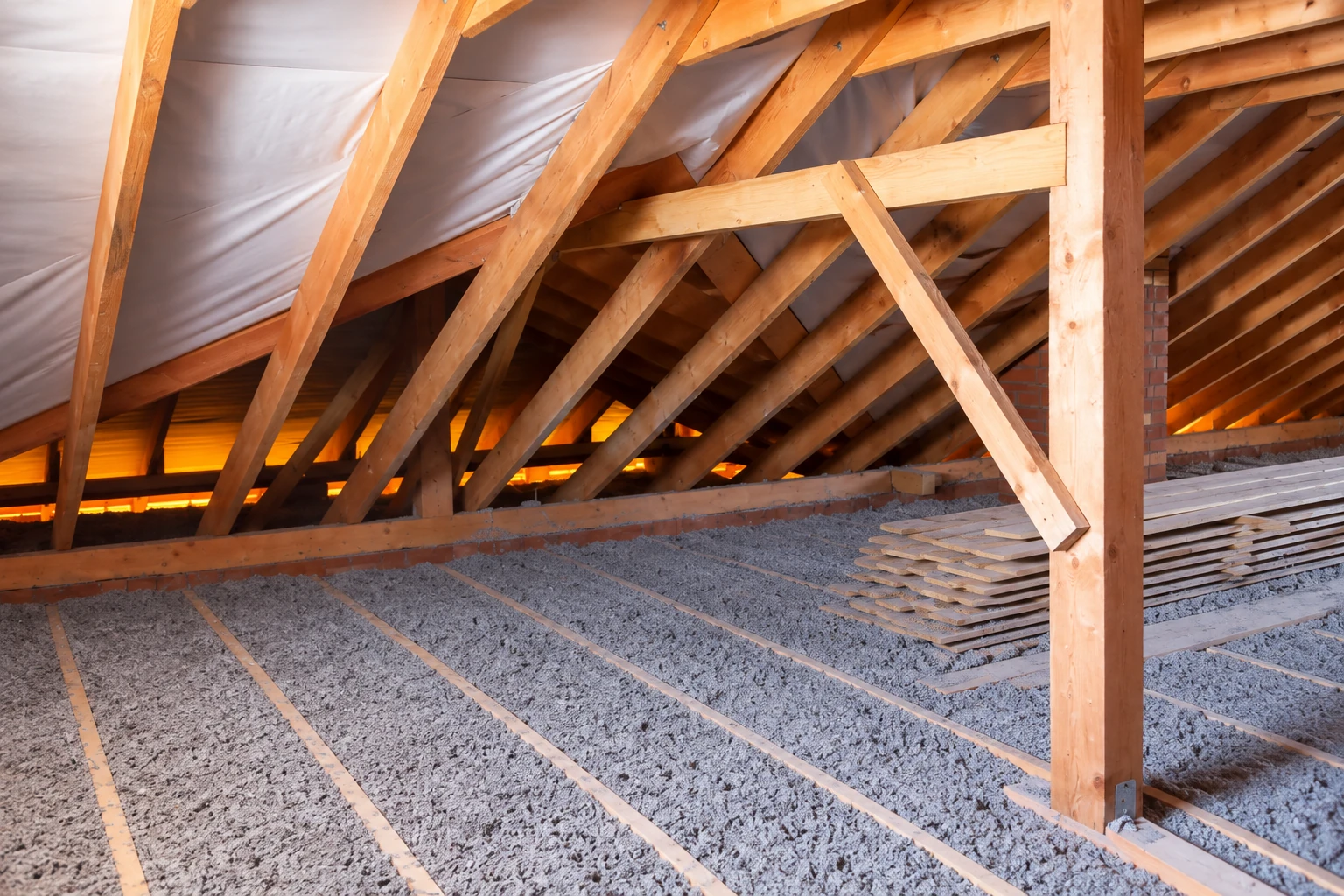
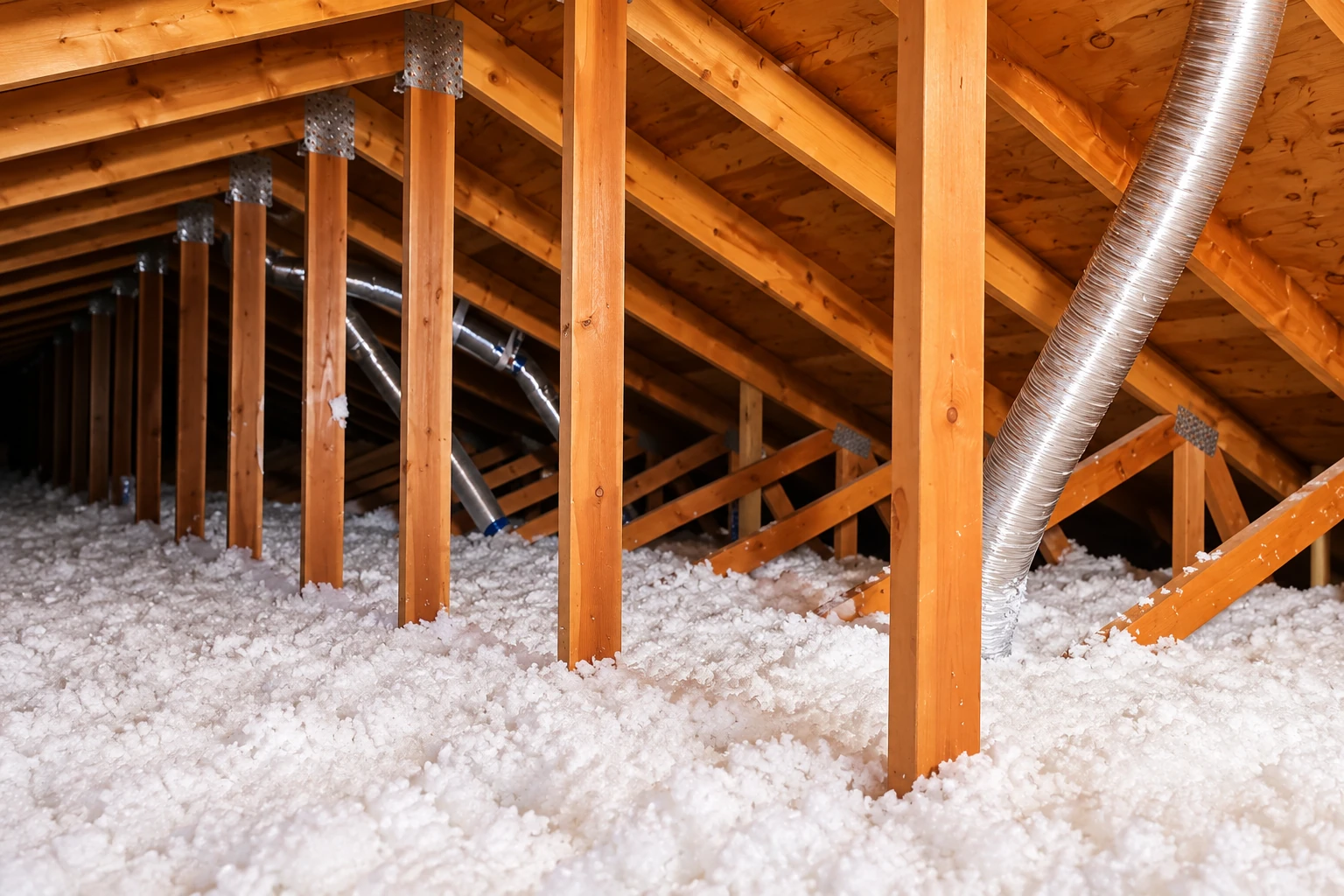
Foam isn't always the answer, and I'll say so. It costs more because it seals air while it insulates, and in a lot of attics, sealing the gaps and topping up with blown-in insulation, loose fill blown in through a hose, does the job for less. Foam usually wins when the ductwork runs through the attic, because foam under the roof keeps those ducts inside the warm part of the house. If the old fill up there is wet or full of droppings, we pull it out before any new attic insulation goes in, so the problem doesn't stay.
Other insulation work that often comes with it
Attic insulation
If the whole upstairs runs hot in summer and cold in winter, a full attic job may do more for those rooms than foam in one spot.
Blown-in insulation
A good fit for an open attic floor that just needs more depth, and it costs less than foam over the same area.
What happens after you call about spray foam in Reno?
Call or send the form
Call (775) 447-1048 or fill out the form and tell us which rooms are giving you trouble. We'll set a time for me to come see the house.
I come out and look
I come out myself, look at the attic, walls or crawl space, and walk you through what I found and what I'd do first. Then you get a written estimate showing which foam goes where and what it costs, so you can weigh it before you decide.
We settle permits and dates
Once you say yes, we settle the permit question with the office that covers your address. We also set the day around where you'll stay while the foam sets.
We install and walk through
The crew and I do the work and keep the rest of your house covered while we spray. At the end we go over every area with you, so you know what's in your attic or walls and why.
Questions before you book spray foam
How do I choose between open-cell and closed-cell spray foam?
Choose closed-cell foam where the foam also has to hold back water vapor, because it can be both the insulation and the vapor control layer, and open-cell can't since it lets moisture pass. Open-cell still blocks air very well, so it works in plenty of spaces above ground. For the same reason, open-cell often isn't a match below ground level, so if you're insulating a basement wall, ask us which foam suits that space.
How much does spray foam insulation cost in Reno?
Spray foam insulation in Reno usually costs about $2,500 to $10,000 per job, and that's what the work typically runs around here, not a quote from us. Where your job lands depends on the area covered, the foam type and how easy the space is to reach. I'll give you your own number once I've seen the space.
Do I need a permit for spray foam insulation in Reno?
Some jobs need one and some don't, and we find out with the office that covers your address before work starts. The City of Reno issues building permits, which most construction projects need, and it goes by the International Residential Code for the work on one- and two-family homes that's exempt. When your job needs a permit, we apply for it.
How long after spray foam can we go back in the house?
Stay out for as long as the foam's maker recommends, which for some professional two-part foams is 24 hours, though it varies by product. We'll tell you what the maker of your foam says and plan the day with you, so you know where the kids and pets will stay. If someone at home has asthma, allergies or a skin condition, tell us early, because people with those histories are advised to read the product information carefully and may want a different kind of insulation.
Does spray foam have to be covered after it's installed?
Some foam does and some doesn't, depending on the foam itself and what code requires. When it does, a thermal or ignition barrier, a cover such as a coating or drywall, goes over it, and when it doesn't, the foam can stay exposed. We sort that out when we pick the foam, so you know before we start whether you'll need a cover.
Who licenses insulation contractors in Nevada?
The Nevada State Contractors Board licenses contractors in one or more classifications, and the classification shows the type of work each contractor may do. We're fully licensed and insured, so feel free to ask me about it when I come out.
Get a written spray foam estimate for your house
Send the form and we'll get back to you within one business day to set a time. I come out myself for a free in-person look, and afterward you get a written estimate with no pressure to book. Backed by our satisfaction guarantee.
Explore our services and areas
Services
- Attic insulation
- Blown-in insulation
- Home insulation
- Insulation removal
- Crawl space insulation
- Wall insulation
- Air sealing services
- Basement insulation
- Closed-cell foam insulation
- Open-cell foam insulation
- Commercial insulation
- Crawl space vapor barrier
- Vapor barrier installation
- Attic air sealing
- Retrofit insulation
Get the right foam picked for your house
Call (775) 447-1048 or use the form, and mention whether your attic has vents and whether anyone at home has asthma or allergies so I can plan the visit.